
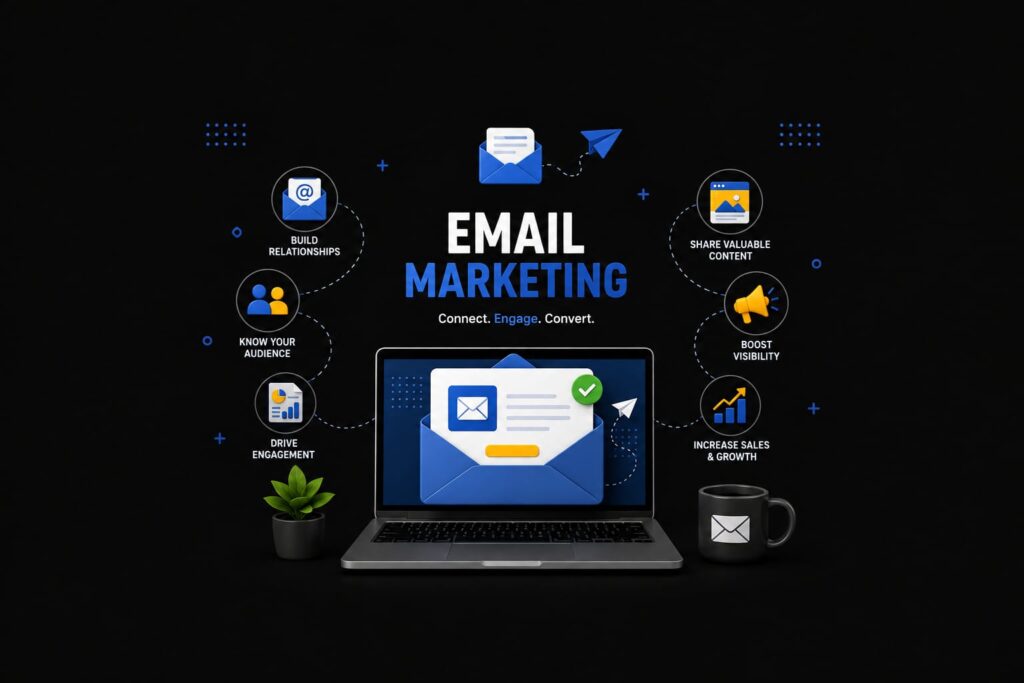

In a crowded inbox, timing is everything. Email marketing automation empowers businesses to send the right message at the perfect moment without lifting a finger every time. By responding automatically to subscriber actions—such as downloading an eBook, abandoning a cart, or making a purchase—automated workflows build meaningful, personalized connections that elevate customer trust and boost long-term ROI.
As competition for customer attention continues to grow, businesses need more than occasional promotional emails to stay connected with their audience. Modern consumers expect relevant, timely, and personalized communication throughout their buying journey. Automation makes this possible by sending targeted messages based on real-time actions rather than fixed schedules. This approach not only saves valuable time but also increases engagement, strengthens customer relationships, and improves conversion rates.
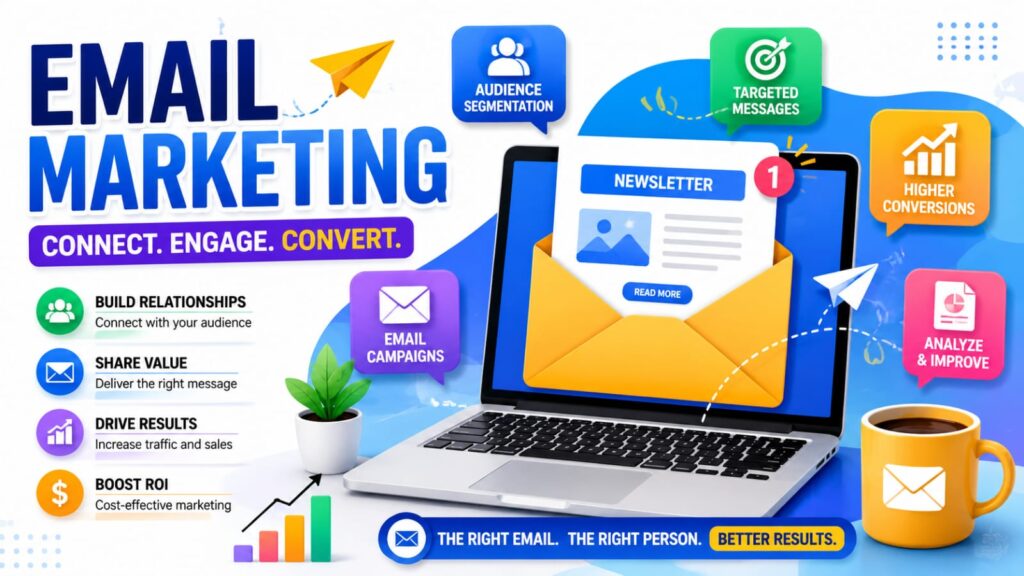
This comprehensive guide explores everything you need to know about Email Marketing Automation, including how it works, its benefits, essential workflows, implementation steps, best practices, performance measurement, and common mistakes to avoid. Whether you are launching your first automated email sequence or improving an existing strategy, this guide will help you build effective workflows that increase engagement, nurture leads, retain customers, and generate sustainable business growth.
In addition, detailed performance reports help businesses understand which emails generate the highest engagement, which workflows contribute most to conversions, and where improvements are needed. Instead of relying on assumptions, marketers can make informed decisions using real customer behavior and campaign data. By combining strategic planning, customer segmentation, valuable content, and continuous optimization, businesses can build an efficient communication system that supports stronger customer relationships, increases marketing productivity, and contributes to sustainable long-term business success through smarter Email Marketing Automation.
Why Email Marketing Automation Matters
Customers interact with businesses through multiple touchpoints before making a purchase. Sending the same message to every subscriber often results in lower engagement because customer interests and buying stages differ.
Automation helps businesses deliver relevant communication by responding to customer actions in real time.
An effective automation strategy helps businesses:
- Save time through automated workflows
- Deliver personalized customer experiences
- Increase email engagement
- Nurture leads efficiently
- Improve customer retention
- Recover abandoned carts
- Increase sales opportunities
- Support long-term business growth
Instead of relying on manual campaigns, businesses can create systems that continuously engage customers while requiring minimal ongoing effort.
Benefits of Email Marketing Automation
Implementing Email Marketing Automation provides several long-term advantages for businesses.
Saves Time
Automated workflows eliminate repetitive manual tasks, allowing marketing teams to focus on strategy and optimization. Once campaigns are set up, emails are triggered automatically based on user actions. This reduces human error, improves efficiency, and ensures timely communication with every subscriber.
Improves Personalization
Subscribers receive emails based on their interests, behaviors, and purchase history rather than generic messages. Personalized recommendations, dynamic content, and targeted offers make each email more relevant. This creates a better customer experience and increases the likelihood of engagement.
Increases Customer Engagement
Relevant communication encourages more opens, clicks, and meaningful customer interactions. Sending the right message at the right time keeps subscribers interested in your brand. Consistent engagement helps build trust and strengthens long-term customer relationships.
Generates More Qualified Leads
Automation nurtures prospects with educational content until they are ready to make purchasing decisions. Lead nurturing workflows guide users through every stage of the buyer’s journey. As a result, sales teams receive better-qualified leads with a higher chance of conversion.
Improves Customer Retention
Regular, personalized communication strengthens customer relationships and encourages repeat business. Automated follow-up emails, loyalty offers, and product recommendations keep customers engaged after their first purchase. Strong retention strategies also increase customer lifetime value.
Supports Revenue Growth
Well-designed workflows help convert prospects into customers while encouraging repeat purchases from existing buyers. Automated upsell and cross-sell campaigns introduce relevant products at the right moment. This improves conversion rates, boosts sales, and contributes to long-term business growth.
Email Marketing Automation vs Traditional Email Marketing
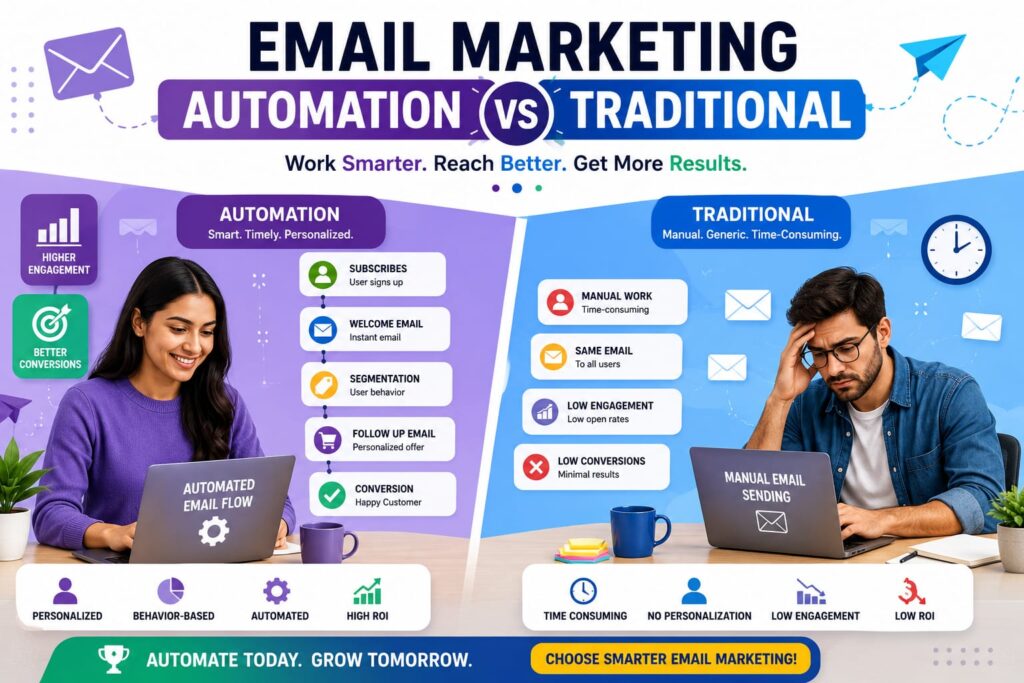
| Email Marketing Automation | Traditional Email Marketing |
|---|---|
| Trigger-based communication | Manual email campaigns |
| Personalized messaging | Same message for everyone |
| Continuous workflows | One-time broadcasts |
| Customer behavior tracking | Limited personalization |
| Automatic follow-ups | Manual follow-ups |
| Higher efficiency | Greater manual effort |
Both approaches have value, but automation provides greater scalability and personalization for growing businesses.
Step 1: Define Your Marketing Goals
Every successful automation strategy begins with measurable objectives.
Common goals include:
- Lead generation
- Customer nurturing
- Product education
- Sales growth
- Customer retention
- Webinar registrations
- Course enrollments
- Customer onboarding
Clearly defined goals help determine which workflows should be created first.
Step 2: Understand Your Customer Journey
Different subscribers require different communication depending on where they are in the buying process.
Typical customer stages include:
- Awareness
- Consideration
- Decision
- Purchase
- Retention
- Advocacy
Mapping the customer journey helps businesses send relevant emails at every stage.
Step 3: Build a Quality Email List
A successful automation strategy starts with permission-based subscribers.
Effective list-building methods include:
- Newsletter signup forms
- Free downloadable resources
- Webinar registrations
- Online courses
- Product trials
- Event registrations
- Loyalty programs
- Exclusive offers
Avoid purchasing email lists, as they often reduce engagement and can harm sender reputation.
Step 4: Create Effective Email Workflows
An email workflow is a sequence of automated messages designed to achieve a specific objective.
Popular workflows include:
- Welcome series
- Lead nurturing sequence
- Abandoned cart recovery
- Customer onboarding
- Product recommendation emails
- Re-engagement campaigns
- Post-purchase follow-up
- Feedback requests
- Renewal reminders
Each workflow should provide value while guiding subscribers toward the next logical action.
Step 5: Write High-Quality Email Content
Even the best automation workflow cannot succeed if the email content fails to engage readers.
Every email should include:
- A compelling subject line
- Personalized greeting
- Clear value proposition
- Short, readable paragraphs
- Strong call-to-action
- Professional design
- Mobile-friendly formatting
- Relevant links
Focus on solving customer problems rather than sending overly promotional messages.
Step 6: Monitor Performance Metrics
Successful Email Marketing Automation depends on measuring meaningful performance indicators rather than simply counting sent emails.
Important metrics include:
| Metric | Why It Matters |
|---|---|
| Open Rate | Measures subject line effectiveness |
| Click-Through Rate | Indicates engagement |
| Conversion Rate | Tracks business outcomes |
| Bounce Rate | Monitors email quality |
| Unsubscribe Rate | Reflects audience satisfaction |
| Spam Complaints | Protects sender reputation |
| Revenue Per Email | Measures financial performance |
| Workflow Completion Rate | Evaluates automation effectiveness |
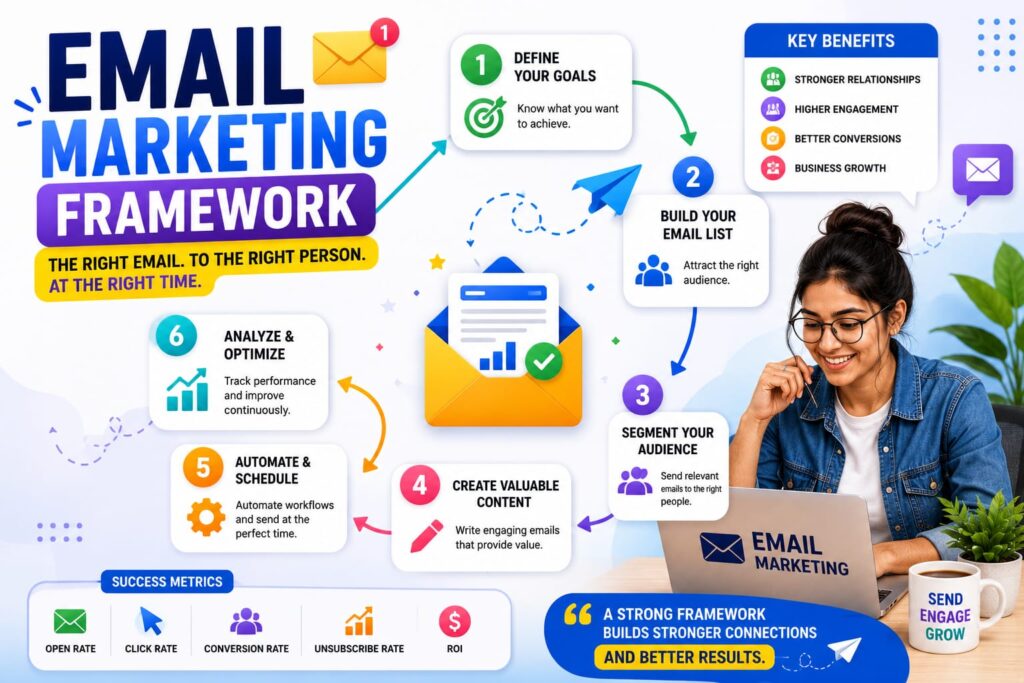
Email Marketing Automation Framework
The email marketing automation framework outlined on the page follows a five-stage structured workflow:
- Plan: Define clear campaign goals, identify target audience segments, and map out customer journeys.
- Build: Create email workflows, select automation triggers, design email templates, and draft sequential email content.
- Launch: Test every automation path and trigger before activating the workflows.
- Measure: Monitor engagement, open/click rates, conversions, and customer interactions using key metrics.
- Optimize: Continuously analyze performance data to refine subject lines, adjust triggers, and update underperforming emails.
Email Marketing Automation
Dynamic Behavioral Micro-Segmentation
- In-Email Interactivity: Use interactive elements (e.g., in-email polls or quizzes) to let subscribers update their own preferences without leaving their inbox.
- Real-Time Content Swapping: Adjust email content dynamically based on the user’s location, local weather, or real-time inventory status at the exact moment they open the email.
Lifecycle & Value-Based Workflows
- VIP Loyalty Escalation: Automatically trigger exclusive perks, early access passes, or personalized video thank-yous when a subscriber hits specific cumulative spend milestones.
- Predictive Churn Prevention: Monitor drops in user activity (such as reduced app logins or lower open rates) to trigger friendly check-ins or targeted win-back incentives before they fully lapse.
AI-Driven Optimization
- Predictive Send-Time Personalization: Automatically deploy emails at the precise hour each individual subscriber is historically most likely to open their inbox.
- Algorithmic Subject Line Testing: Use automated multi-armed bandit testing to continuously shift send volumes toward subject lines and preview text that generate higher open rates.
Interactive & Gamified Email Elements
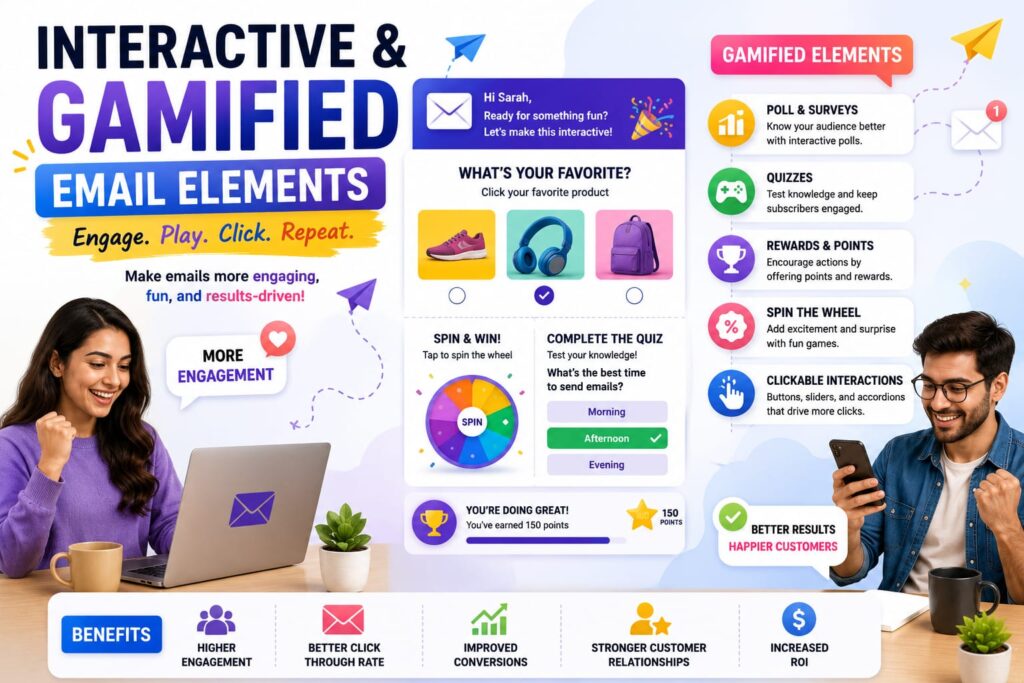
Drive higher click-through rates and keep subscribers engaged directly within their inboxes by incorporating dynamic, game-like features.
- AMP for Email & In-Box Actions: Allow users to submit surveys, RSVP to events, or browse interactive product carousels without leaving the email.
- Gamified Rewards & Unlocks: Use interactive elements like scratch-off discount vouchers, spin-to-win wheels, or mystery offer cards to make opening emails fun.
- Live Dynamic Polls & Quizzes: Collect zero-party data by embedding real-time polls that display live voting results instantly after a subscriber clicks.
- Interactive Accordions & Expandable Content: Keep email design clean and scannable on mobile by using collapsible sections for long product specs or FAQs.
Common Mistakes to Avoid
Avoid these mistakes when implementing Email Marketing Automation:
- Purchasing email lists
- Sending too many emails
- Ignoring audience segmentation
- Creating overly complicated workflows
- Forgetting mobile optimization
- Using weak subject lines
- Neglecting workflow testing
- Ignoring performance data
- Failing to clean subscriber lists
- Treating every subscriber the same
Avoiding these issues improves engagement and customer satisfaction.
Conclusion
Email marketing automation is no longer just a convenient tool, it is an essential strategy for delivering personalized, timely communication at scale. By shifting from static broadcast emails to dynamic, trigger-based workflows, businesses can nurture leads, strengthen customer loyalty, and drive consistent conversions without increasing manual workload.
The key to long-term success lies in understanding the customer journey and continuously refining your approach. Prioritize building permission-based lists, segmenting your audience thoughtfully, and utilizing actionable analytics to test and optimize every campaign. As AI capabilities and interactive inbox elements continue to evolve, staying adaptable will ensure your automated workflows remain engaging, relevant, and highly profitable for years to come.
Another key advantage of automation is its ability to free marketing teams from repetitive tasks, allowing more time for strategy, creativity, and customer relationship building. As technology continues to evolve, businesses that invest in smarter automation, meaningful personalization, and data-driven decision-making will remain better positioned to compete in increasingly competitive digital markets.
By implementing Email Marketing Automation thoughtfully and continuously improving every workflow, organizations can build stronger customer experiences, maximize marketing return on investment, and create sustainable growth for years to come.
Add the following paragraph at the end of the Conclusion. It adds approximately 200 words, maintains the article’s tone, and keeps the Email Marketing Automation keyword within your preferred density range.

Frequently Asked Questions
What is Email Marketing Automation?
Email Marketing Automation is the process of automatically sending personalized emails based on customer actions, predefined triggers, or behavioral data to improve engagement and conversions.
Why is email automation important?
Automation saves time, improves personalization, nurtures leads, strengthens customer relationships, and supports consistent communication throughout the customer journey.
What types of emails can be automated?
Businesses commonly automate welcome emails, abandoned cart reminders, onboarding sequences, lead nurturing campaigns, renewal reminders, product recommendations, and re-engagement campaigns.
How do businesses measure automation success?
Performance is measured using metrics such as open rates, click-through rates, conversions, revenue, workflow completion rates, and subscriber engagement.
Can small businesses benefit from email automation?
Yes. Automation helps small businesses communicate consistently with customers while reducing manual work and improving marketing efficiency.